
ProGen PRP
Treating Hair Loss With Your Own Biology
Platelet rich plasma comes from your own blood, which is what makes it such an appealing option for thinning hair. We draw a small sample during your visit, spin it in a centrifuge for a few minutes to separate the plasma from everything else, and what remains is a concentrated dose of your own platelets and growth factors. Nothing is added. It is simply your body's healing machinery, concentrated.
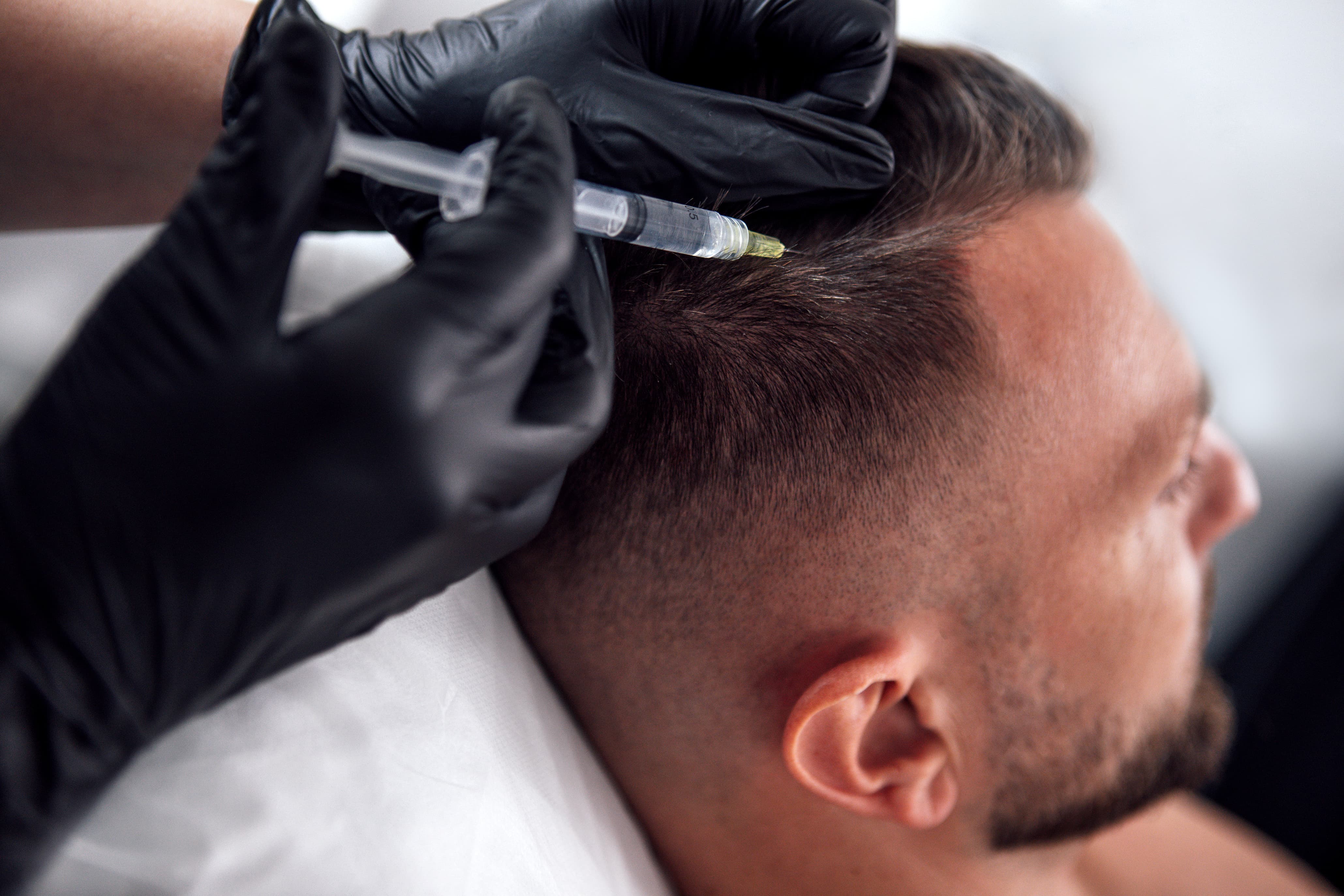
Injected into the scalp, that plasma stimulates cellular regeneration around the hair follicles. Dormant follicles are encouraged back into an active growth phase, existing hairs grow in thicker, and the scalp environment improves overall. At June Medical, Dr. Vanessa Vélez Martínez uses the ProGen system to prepare a consistently high quality plasma concentration for every patient.

Who It Helps and What the Protocol Looks Like
PRP works best for people in the earlier stages of thinning, when follicles are still present but weakening. Both men and women see results, whether the pattern is a widening part, a receding hairline, or diffuse thinning across the crown. If a follicle has been gone for many years, PRP has less to work with, which is why coming in sooner matters.
A session takes about forty-five minutes start to finish, including the blood draw and processing time. Most patients start with three treatments spaced four to six weeks apart, followed by maintenance every four to six months. Shedding usually slows first, within the first couple of months, with visible density improvements showing up around the three to six month mark.
What makes ProGen PRP worth considering for hair loss.